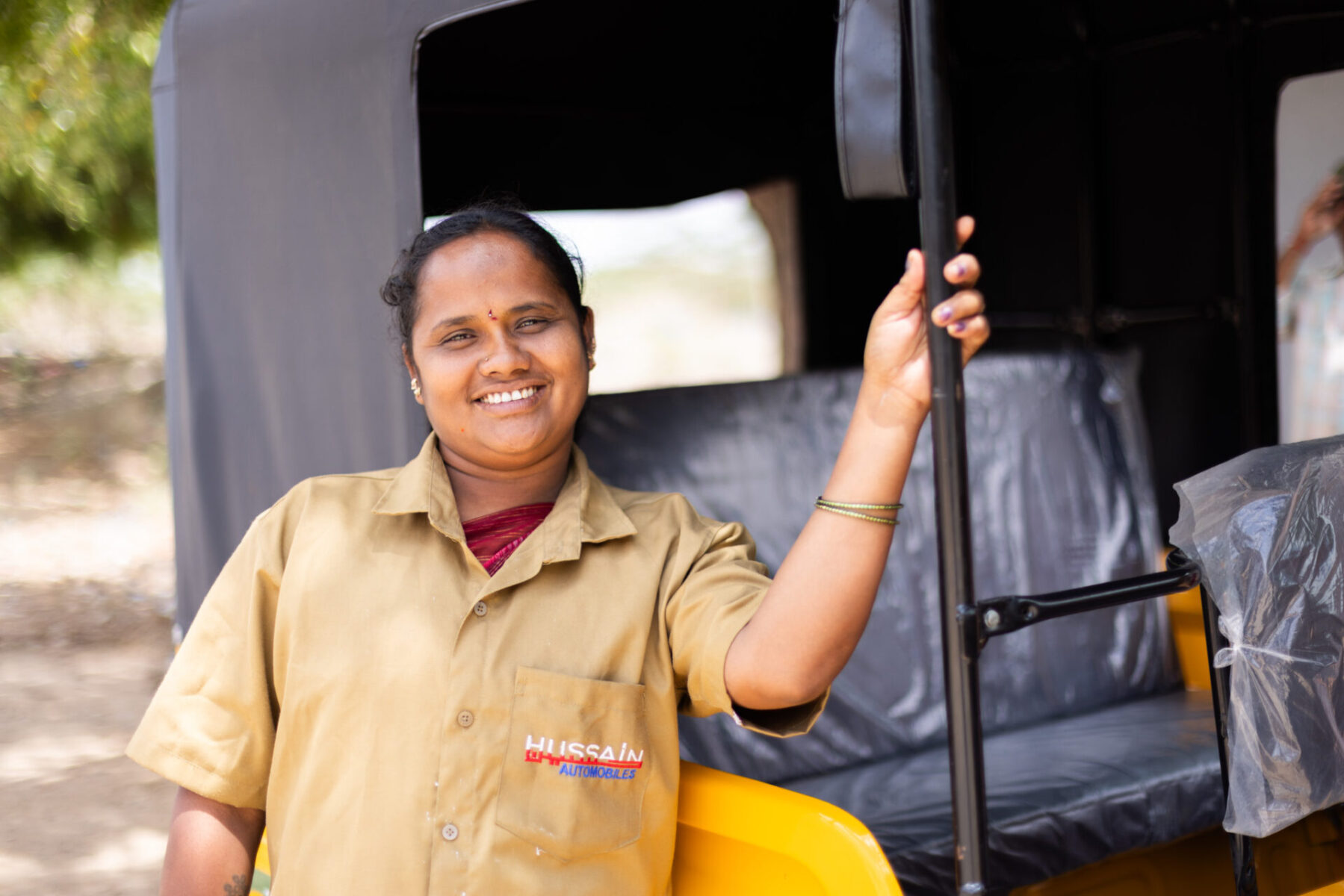

On August 29, Anjali walked onto the RDT Main Campus in Anantapur and received the keys to an auto-rickshaw of her own. The same day, 21 other women were handed theirs. For Anjali, 31, it was the end of a five-year stretch that began with a personal tragedy.
In 2021, Anjali lost her husband, who was a driver, in a road accident. Grief did not end there for her. Her father passed away from an illness, just 3 months after her husband’s demise. Anjali, who worked as an agricultural labourer, remained at her home for a few months grieving. This impacted her income and the family in general, as she was responsible for the sustenance of her mother and her two young daughters.
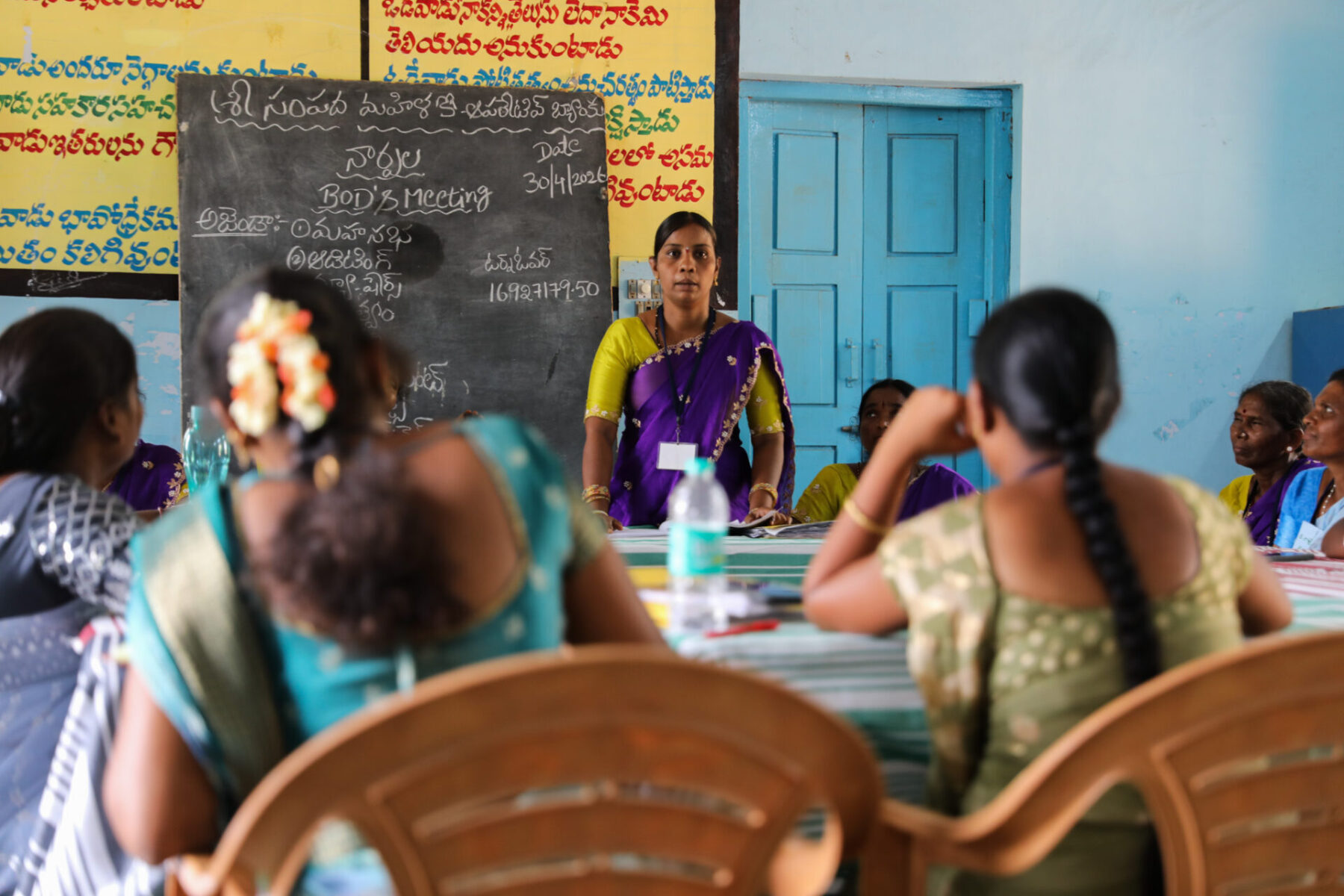
While her in-laws extended support, the grief had also taken a physical toll on Anjali, who had grown weak from not eating enough. Her Mahila Sangham, the women’s group she had long belonged to, and Community Organisers of RDT came looking for her. They checked on her and helped her step outside.
By the following year, she was back in the fields, but the wages could not stretch across three dependents. In 2023, she took a job at a private hospital in Anantapur to cover school fees and household costs. She kept the fieldwork too. The daily commute from her village, on top of two jobs, left her with almost no time to rest.
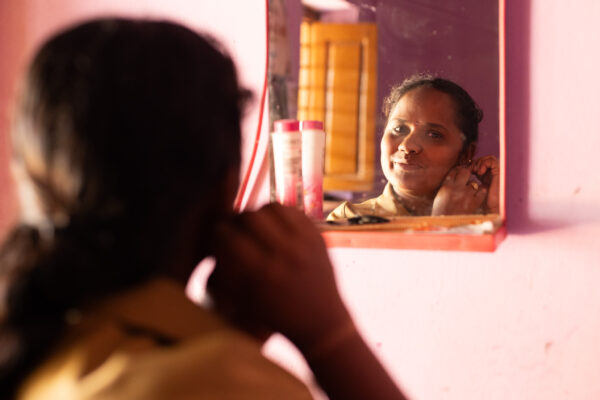
In 2026, the RDT Community Organiser in her village told her about the Auto Rickshaw Driving Training. It offered women a way to earn and, in the end, to own a vehicle. Anjali was selected and began lessons in Anantapur. The course went beyond driving. Trainees also took classes in yoga, road safety, karate and self-defence, along with counselling and personality development. She doubted if she could do it. So did some of her relatives.
“At first, I was scared,” she said. “How can I drive an auto? Even my family members were a bit doubtful. But my daughters kept motivating me, and the trainer was also supportive and helpful. In a few days, I started getting comfortable. I told myself I had to do it for my daughters.”
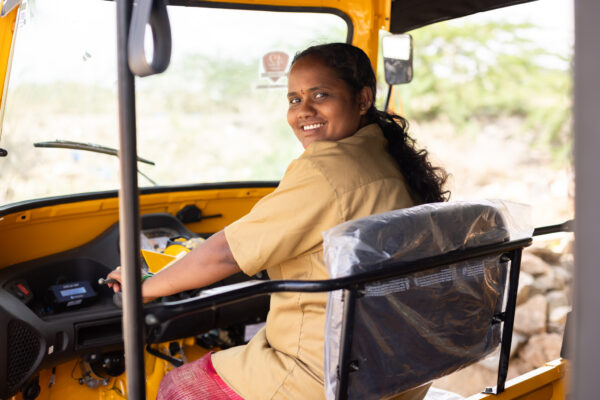
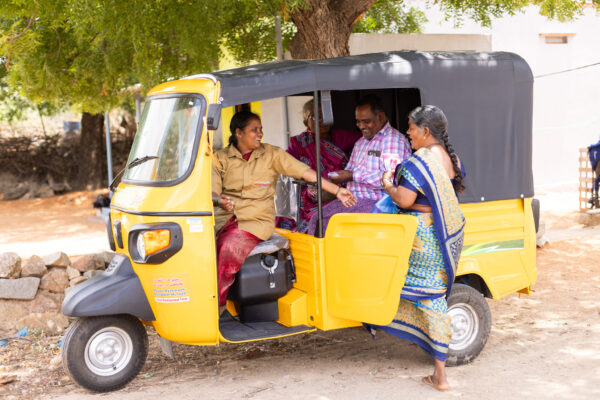
Now she drives every day from her village to Dharmavaram, and she takes villagers on temple and pilgrimage trips. Relatives who were surprised at first have come around as they watched her grow more self-reliant.
Her daughters now study at a residential government school. Much of what Anjali does, she says, comes down to one aim: a secure future for them and a financially independent life for herself.
They are also her proudest audience. She used to visit them at school by bus. Now she arrives in her own auto. “They look quite happy and proud,” she said. “It fills me with joy to see them like this.”
Passengers have noticed, too. Women in nearby villages find it unexpected and reassuring to see a woman in the driving seat. “Many women said they felt safe that a woman was driving,” Anjali said. Some have asked where she learned and whether she could teach them. She points them to the RDT programme.
RDT has been part of her life since childhood. She studied at an RDT tuition school, received a house under the Habitat programme in 2014, joined the Mahila Sangham, and now banks with the women-owned & led Cooperative Bank that was supported by RDT through training. The auto-rickshaw is the latest of those steps.
Since 2023, the driving programme has supported 45 women. It is aimed at supporting single rural mothers, particularly those from economically weaker families, by pairing a skill with an asset of their own.
Anjali has a message for women in her situation. “I just want to tell women, especially those who are single mothers like me, that they can do whatever they want,” she said. “Others shouldn’t decide what a woman can or can’t do.”
For these women, the vehicle is more than a livelihood. It gives them freedom of movement, and with it the authority to choose their own direction.
Text: Khyati Singh
Images: Vasu K