Amreen’s son weighed just over 600 grams when he was born, and for a long moment she could not understand how someone so small could still be alive. She had already lost two pregnancies before this one. She had learned, the hard way, not to trust hope until it had proven itself. So when doctors flagged concerns about the baby’s growth in her third trimester and referred her for specialised care, she carried the news the way people carry something they expect to break.
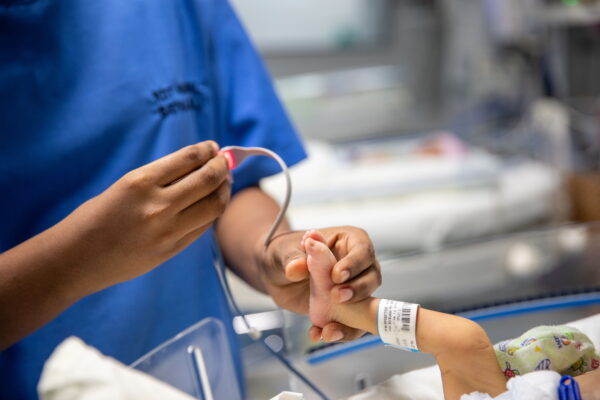
Her son was born prematurely and taken straight into the NICU at RDT Hospital, Bathalapalli. She remembers standing over the incubator, unable to make sense of the machine her son had disappeared into.
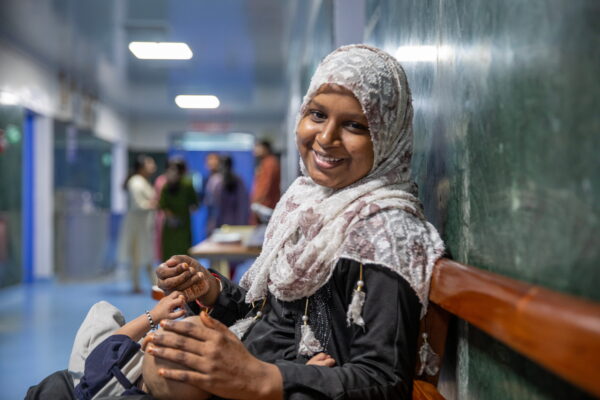
“I had already gone through a lot before this,” she says. “When they told me how small my baby was, I didn’t believe there was a chance for him to survive.” She did not yet have a word for what she was looking at. “I was confused how he would survive inside the machine,” she recalls. “I was scared. I didn’t know what a NICU was.”
Three weeks after Chandana had taken her own son home from the same hospital, believing the hardest part was over, he stopped feeding. “He was drinking milk before,” she says. “Then suddenly he could not eat or drink properly. His whole body became red.” She remembers the drive back to Bathalapalli more clearly than she remembers deciding to make it. Doctors found a severe infection and admitted him immediately. What followed were months of ventilator support and a kind of waiting with no visible end. “Each day was a nightmare for me,” she says. “Every day there was some new problem.”

Between 100 and 120 newborns pass through the NICUs at Bathalapalli every month, in a rural area where access to NICUs is limited by distance and cost, a cost that can be unbearable for low income families.
“There are people who have money and people who don’t,” Amreen says. “We fall into the second category.” Her husband works as a daily wage labourer. Months of private neonatal care, she says, without any bitterness in her voice, simply were never something they could have paid for.
That arithmetic repeats itself across the district. Most families who arrive at the hospital are farmers or daily wage workers, with newborns carrying conditions that are treatable, if a hospital is close enough with the right facilities, and a family can afford to reach it.
Inside the unit, survival is the beginning, not the goal. Every baby follows an individual care plan, feeding tracked, growth measured daily. Nurses taught Amreen Kangaroo Mother Care, the practice of holding her son skin to skin, which doctors have found helps premature infants gain weight and stabilize faster than incubator time alone.
“I didn’t know whether I could even hold him,” she says. “The nurses taught me how to pick him up, how to wash my hands properly before entering, how to care for him. They told me it would help him gain weight and become stronger.”
For Chandana, contact was the thing infection control took away instead. “He was not with me for months,” she recalls. “We were allowed to visit only once a week. I was anxious about what was happening.” She waited outside the unit for news, learning her son’s condition in fragments, from nurses coming off shift.
“A newborn’s condition can change very quickly,” says Dr Dasarath Ramiah, who has spent years inside this NICU learning to say that sentence to parents who do not yet understand why everyone around them moves so carefully. “The first days and weeks of life are critical.” Prematurity and infection are different emergencies, he says, but they demand the same discipline: constant monitoring, protocols that do not bend, a team trained to catch the moment something changes.
That discipline is what earned the unit its accreditation from the National Neonatology Forum in 2021, a recognition built on years of training, standardised protocol, and nursing education which are hard for most rural facilities to sustain. “Our responsibility is to ensure there is no compromise on quality,” Dr Dasarath says. “Whether it is equipment, nursing care, protocols, or treatment standards.” He is candid about what the accreditation does beyond the paperwork. “It helps bridge the perception people often have about rural hospitals,” he says. “Families want to know that they are receiving quality care. Accreditation builds that trust.”
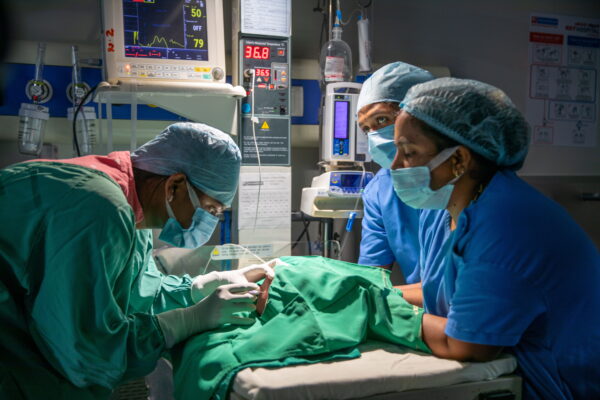
The same recognition now lets the hospital run fellowship programmes in neonatology, training specialists who go on to strengthen newborn care elsewhere in rural India, a small multiplier against a problem too large for one hospital alone. “The goal is not only survival,” Dr Dasarath says. “The goal is healthy development.” Every high-risk baby who leaves the NICU enters a structured follow-up programme: hearing checks, vision screening, developmental monitoring, growth tracking, long after the incubator has become a memory.
Amreen’s son smiles now when she walks into a room. “My baby now plays, smiles at me, and recognises me,” she says, and there is nothing left in her voice of the mother who once did not believe he would survive. Chandana’s son, once tethered to a ventilator, is an active ten-month-old who reaches for her the moment she picks him up. “Now I can hold him, play with him, feed him, and look after him,” she says, still faintly amazed that this is simply her life now.
New mothers keep arriving at Bathalapalli, standing where Amreen and Chandana once stood, afraid to hold a child so small. What Amreen and Chandana can tell them is that the fear passes, and the holding stays, and for the child, a new future awaits.
Text: Mathusree Menon