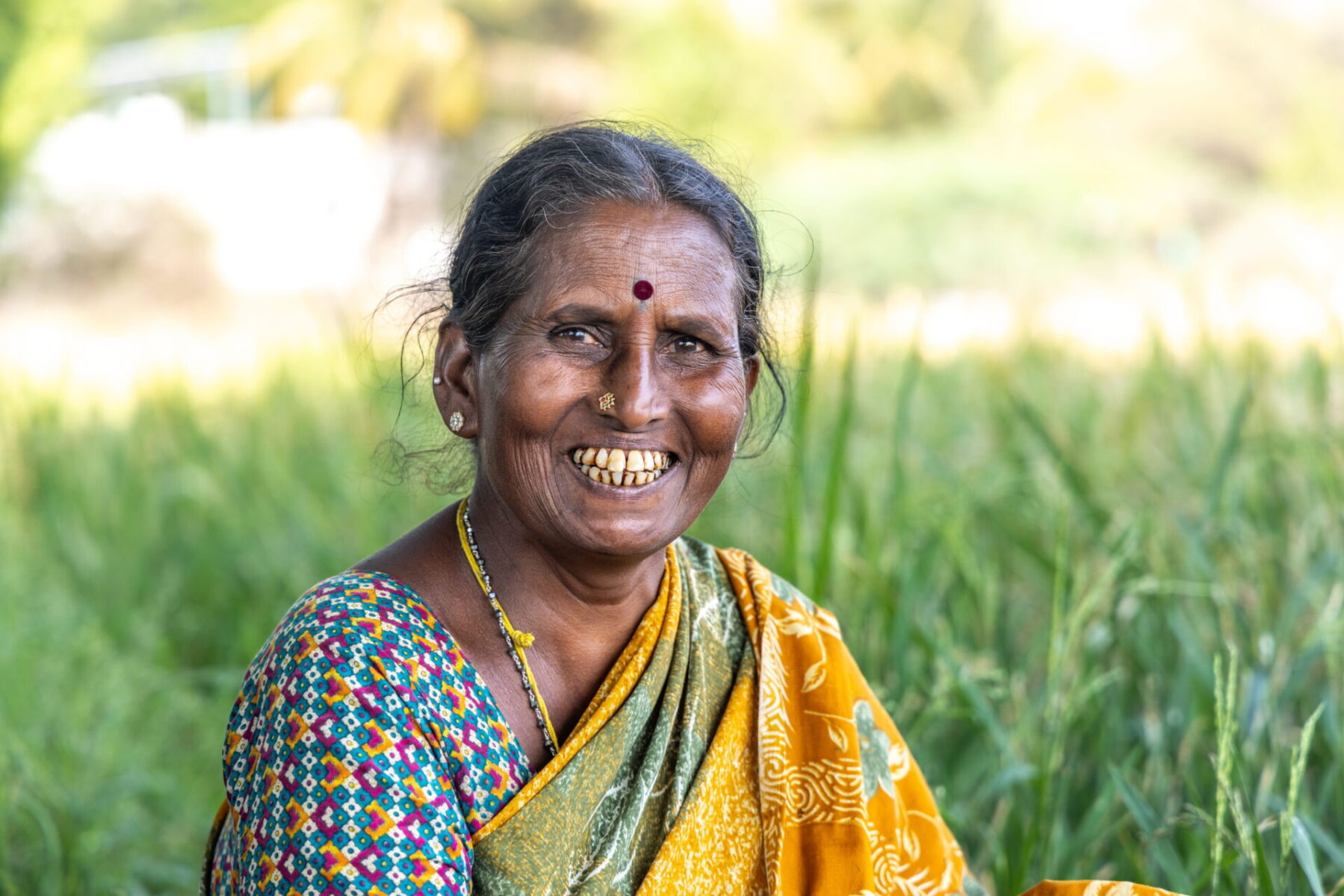
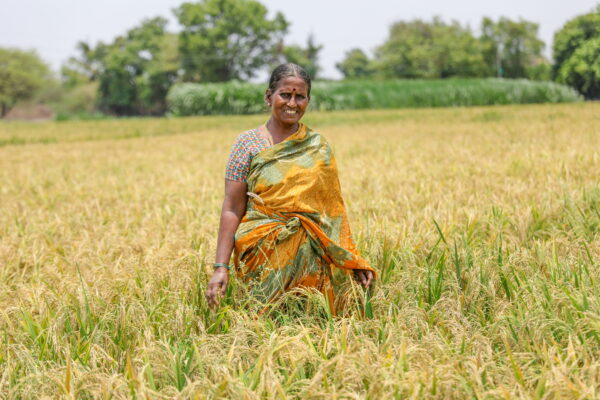
Standing amidst her seven acres of cultivated land, Venkatalakshmi points towards the fruit trees that now dot her farm. “There was a time when we could only grow groundnuts,” she says. “Now we cultivate tomatoes, okra, mango, sapota, custard apple and many other crops.”
For the 60-year-old farmer, the sight is a reminder of how much has changed, not only on her land, but across Papampalle. Located in a drought-prone region, the borewells frequently ran dry, cultivation depended almost entirely on uncertain rainfall, and farming was often limited to a single season. With few livelihood opportunities available locally, many families sought work elsewhere whenever crops failed.

“When I came here more than thirty years ago, there were no reliable water resources,” recalls Venkatalakshmi. “Water would come only once in several days. There was only one borewell, and farming was very difficult.” she adds.
The challenges extended beyond agriculture. Water scarcity affected food security, incomes and nutrition. Families adapted as best they could, relying on drought-resistant crops and managing with limited resources. Yet the underlying problem remained unchanged, which was that without water, neither land nor livelihoods could thrive.
Recognising that these challenges were deeply interconnected, Rural Development Trust (RDT) introduced its Eco Village Initiative in Papampalli. Introduced by the RDT Ecology and Sustainability sector, the initiative approached the village where water, soil, agriculture, livelihoods, and the environment were closely linked. The first step was restoring water security. Percolation tanks and a check dam were constructed to store the rain water, which together had capacity to store more than 2.2 lakh cubic metres of rainwater annually. These structures helped recharge groundwater, improve borewell levels, and increase water availability across seasons. Uneven and degraded lands were developed for cultivation. Soil conservation measures such as bunding helped reduce erosion and retain moisture. Alongside this, farmers received guidance and awareness on crop planning, horticulture, organic farming practices, and efficient water management.
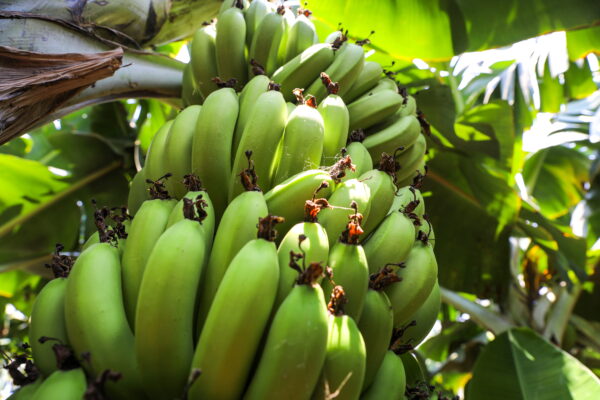
Through the support of the Ecology and Sustainable Livelihoods sector in 2017, the village was adopted as an Eco Village, and fields that once supported a single crop gradually diversified and farmers began cultivating vegetables, horticultural crops, and intercrops alongside traditional agriculture. For Venkatalakshmi, these changes reflect endless possibilities, “If there is water, we can cultivate all the land,” she explains. “Now the water levels are excellent, we have multiple crop cycles and are able to grow different crops in different seasons.”
For more sustainable income, alternative livelihoods were introduced by RDT as part of drought proofing, dairy development became an important source of supplementary income in Papampalle. Today, 1148 people in the village are benefitted directly and indirectly including Venkatalakshmi who combines farming with cattle rearing, through which she earns her income and supports her family’s needs. “Whatever we earn, we invest back into the farm,” she says. “We save for seeds, for cultivation, and for the next season.” Through the RDT Eco Village Project, community participation played a central role throughout the process. Sanghams and Ecology Development Committees were actively involved in planning, implementing, and sustaining the interventions. In a place where farming was uncertain and planning beyond the season was difficult, the initiative, with the help of the community, helped redefine the relationship between the land and the farmers of Papampalle.
As the conversation comes to an end, Venkatalakshmi turns her attention back to the farm. A section of the drip irrigation system needs checking, and the cattle must be fed before the day is over. Like countless others, her day continues with the quiet rhythm of work that sustains both her family and the land.
Her story is part of a much larger change taking shape through RDT’s Eco Village Initiative. Since 2017, around 160 villages have been brought under the initiative, with a new set of villages adopted every five years to restore natural resources and strengthen rural livelihoods.
At the heart of the programme is the revival of water bodies, groundwater restoration, and land development through water conservation measures. Across these villages, 10 check dams have been constructed, helping communities improve water security, restore land, and build resilience for the future.
In Papampalle alone, these efforts have brought 361.20 acres of land back under cultivation since the initiative started. Today, 116 borewells are functional, supported by improved groundwater availability, while sprinkler irrigation systems cover 111 acres. Together, these interventions have transformed the landscape into one that can better sustain farming, strengthen livelihoods, and help communities face uncertain conditions with confidence.
Text: Mathusree Menon